Federal Proposal Would Standardize Cyan Lights for Driverless Vehicles
Regulators are moving to create a national, uniform method for autonomous vehicles to signal their status to the public.
By Fatima Zayed ·
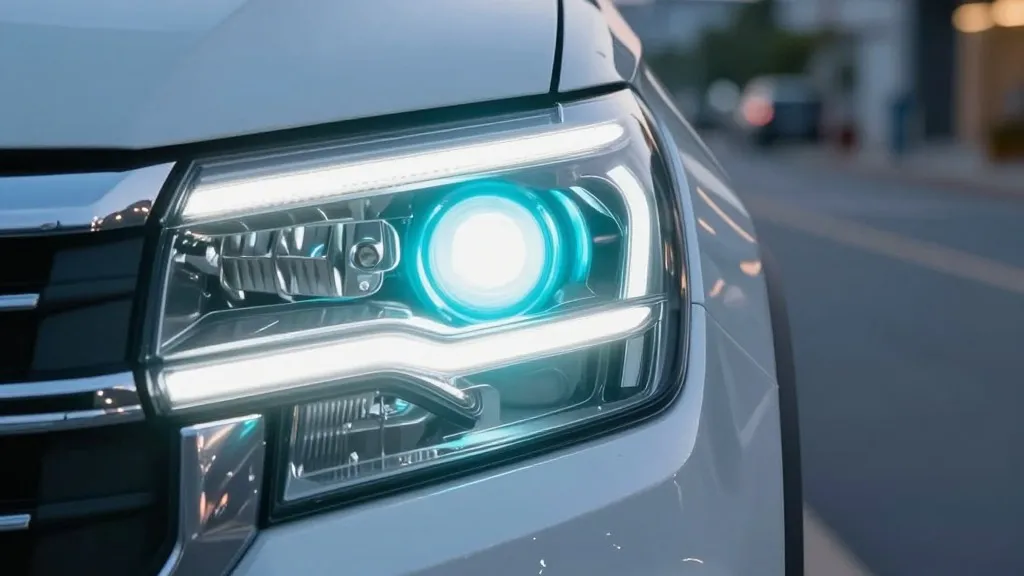
Federal regulators are proposing to establish cyan-colored lights as the standard method for autonomous vehicles to signal they are operating without a human driver. The National Highway Traffic Safety Administration (NHTSA) released proposed changes to Federal Motor Vehicle Safety Standard (FMVSS) No. 108, specifically rewriting the rules to fit autonomous vehicles.
The proposal outlines a plan to create a uniform national standard for the color, brightness, and placement of any lights used to indicate that an automated driving system is in control. The agency states the intent is "to clearly and consistently signal to law enforcement and other road users when an automated driving system is operating the vehicle." The choice of cyan is meant to avoid confusion, as the color red, amber, white, and blue are already designated for specific vehicle functions like braking, turning, headlights, and emergency lights.
While the use of cyan marker lights would be optional for manufacturers, establishing federal specifications would ensure that any company choosing to install them adheres to a single, consistent standard. This move is intended to provide uniform guidance for autonomous vehicle operators like Waymo, Nuro, and Zoox, as well as automakers such as GM and Mercedes.
The proposal also includes a significant rollback of current safety requirements that were designed for human drivers. NHTSA is proposing to remove the mandate for physical hazard switches, manual beam shifters, and interior turn levers in vehicles that do not require them. The agency is also updating the 12.8-volt testing standard to accommodate modern LED architectures and is considering eliminating regulations that dictate the placement of high-beam and low-beam lights.
This regulatory push to streamline autonomous vehicle deployment is occurring alongside continued enforcement of existing rules. In September, NHTSA opened an audit into the Tesla Cybercab to examine the process and technical data used to certify the vehicle. That inquiry centers on the absence of certain features required under FMVSS, including sideview mirrors, pedals, and a steering wheel.
Source: The Verge