1 Terawatt: The Ambitious Goal Behind Tesla and SpaceX's New Chip Factory
A joint venture aims to produce enough artificial intelligence computing power in a single Texas facility to rival the economic output of a mid-sized nation, though experts remain skeptical of the timeline.
By Neha Iyer ·
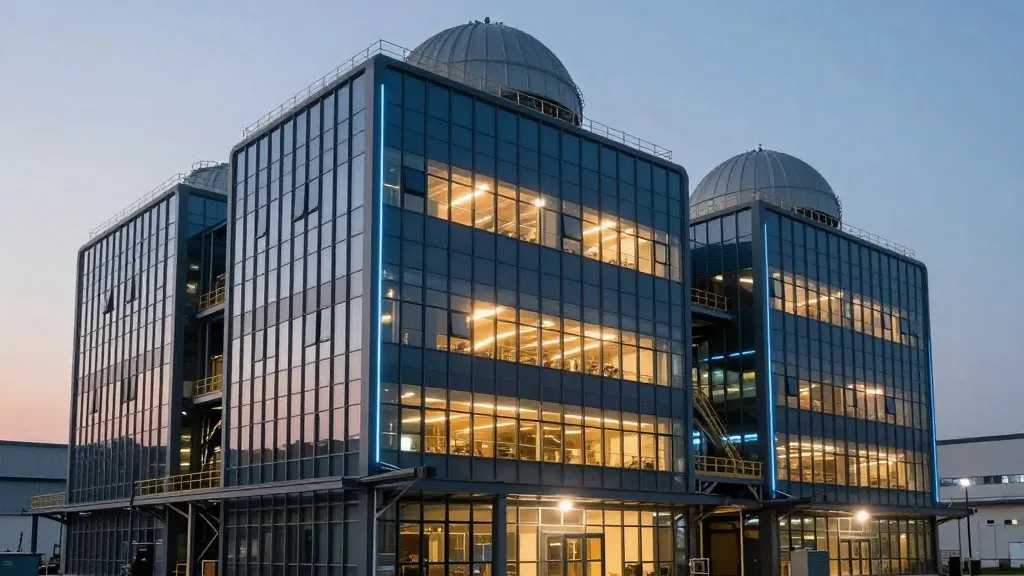
For consumers and businesses relying on artificial intelligence, the landscape of chip supply may shift significantly in the coming years. A new manufacturing facility known as Terafab, a joint venture between Tesla and SpaceX, is planning to produce a massive volume of advanced processors. This move is intended to reduce reliance on external manufacturers for the chips that power self-driving cars, humanoid robots, and large-scale AI models. While the project is still in its early stages, the leaders behind it have outlined an aggressive roadmap for bringing this production capability online.
The central claim of the project is its sheer scale. The facility, located in Gibbons Creek, Texas, is designed to be a vertically integrated factory that handles logic, memory, and packaging all in one place. The stated goal is to manufacture enough hardware to deliver one terawatt (TW) of AI computing power annually. To put this figure into perspective, the economic output of the 20th largest national economy in the world, Switzerland, is approximately $1.14 trillion. The project’s proponents believe the commercial value of the chips produced in this single building could rival that national GDP.
To achieve these targets, the company is leveraging specific technological partnerships. It will utilize Intel’s 14A manufacturing node technology and rely on extreme ultraviolet (EUV) lithography systems. ASML, the world’s only commercial supplier of these high-end lithography machines, is a critical partner in the endeavor. Other major equipment providers include Applied Materials, Lam Research, KLA Corporation, and Tokyo Electron. Additionally, the venture is in discussions with roughly ten South Korean firms for specialized components and packaging equipment.
The timeline for the project is ambitious, with a target for volume chip production at the primary facility by the third or fourth quarter of 2028. An earlier milestone involves producing an experimental test chip at a research facility in Austin, Texas, around the second quarter of 2027. During a live broadcast on October 20, the CEO of both partner companies noted that suppliers have accelerated equipment deliveries to support these dates. He described the timeline as highly aspirational, acknowledging that it carries significant uncertainty or "big error bars."
Beyond the chip factory, the announcement included updates on the company’s AI computing infrastructure. The expectation is that 2.5 to 3 gigawatts of computing capacity will be active by the end of 2026. Furthermore, there is high confidence in adding another 10 gigawatts in 2027, potentially reaching a total of 13 gigawatts by the end of that year. To support this growth, plans are in place to bring a training cluster consisting of 440,000 Nvidia Vera Rubin GPUs online by the end of the second quarter of 2027.
However, experts have raised questions about the feasibility of the one-terawatt goal. Research firm Gartner estimates that the total global capacity for AI-optimized data centers is roughly 44 gigawatts as of late 2026. This means the planned output of Terafab alone would be more than twenty times the current global total. While global AI capacity has grown rapidly, with increases of 3.3 to 3.4 times per year since 2022 according to EpochAI, the leap required for Terafab is substantial.
The first EUV lithography tool for Terafab was reportedly scheduled for delivery in mid-2027, though it remains unclear if this aligns with the expedited timeline mentioned in recent announcements. The facility is designed to mitigate future shortfalls of cutting-edge processors from external foundries like TSMC. If successful, it will supply chips for xAI clusters, Tesla’s autonomous vehicles, Optimus robots, and SpaceX’s orbital data centers, potentially reshaping the global AI hardware market.
Source: Tom's Hardware